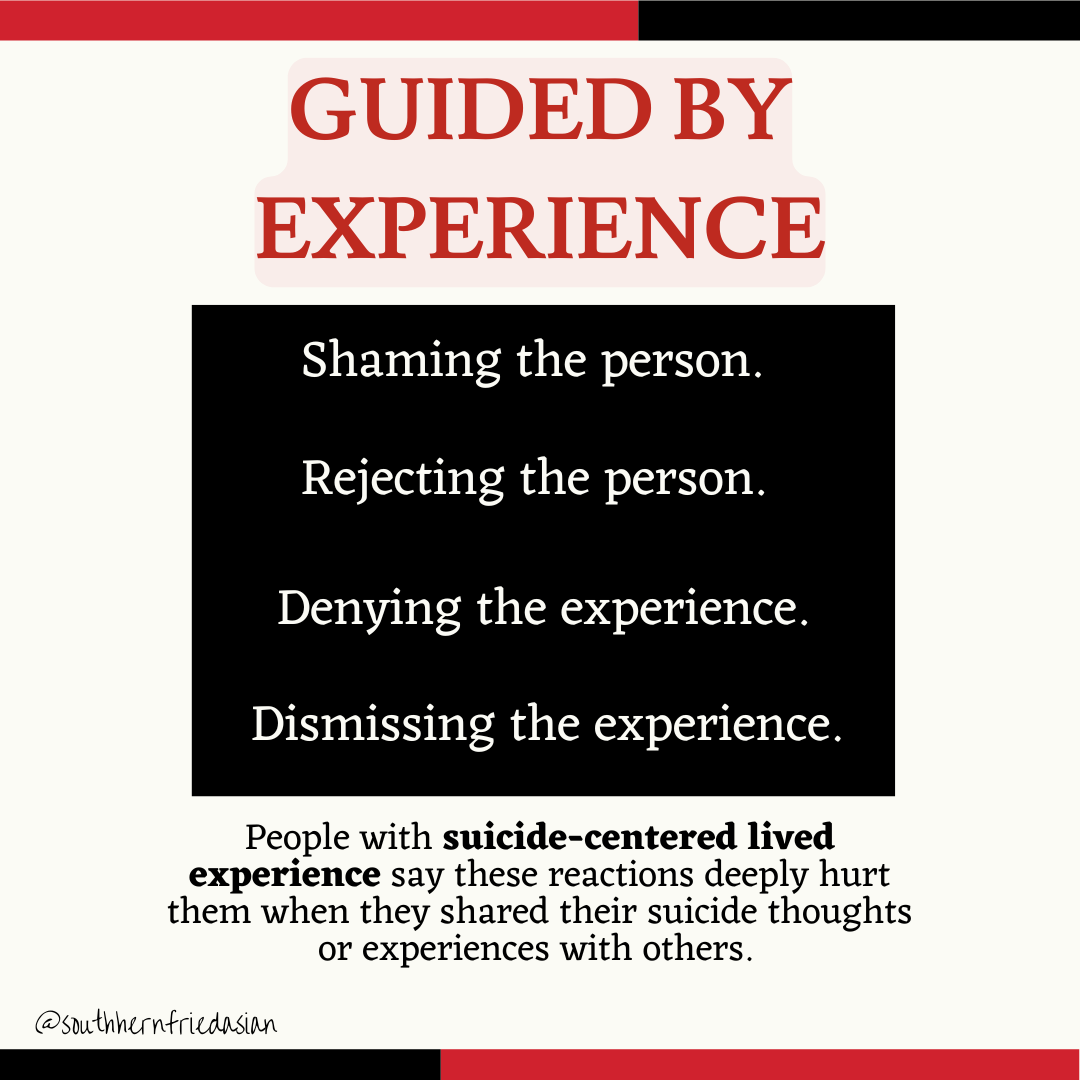
There are certain behaviors that, even if unintentional, can damage trust and harm those who disclose suicide-centered experiences.
In the field of suicide prevention, there’s often guidance on what *not* to do when someone shares suicidal thoughts, yet harmful responses still happen more often than we want to admit. Insensitive or dismissive communication can reinforce stigma, drive people further into isolation, and discourage them from seeking a second source of help.
You may have been the only person they could find the courage to tell. We need to recognize that we may unintentionally add to someone’s pain or shut them down in a time when opening up could keep them living.
While every person’s experience is unique and there is no one right or wrong way to respond, there are still many things we can avoid. Dismissing someone’s experience, shaming them for feelings or thoughts they cannot control, rejecting them altogether, or denying the reality of their experience is not helpful and can do irreparable damage.
When someone discloses something as deeply personal and scary as thoughts of suicide, how we respond matters.
If you find yourself as the “trusted” person to someone who is sharing their experience of suicide there are a few things you can do.
Take a deep breath and pause.
Know it’s okay to have your own feelings. This is a scary situation, but be mindful not to let your feelings take over. Now is the time to remind yourself that the other person is feeling something much more important. Put their needs first. You can openly acknowledge that you are worried for them or even scared, but don’t make the conversation about you.
Listen without judgment. Watch your face, tone, and even thoughts. You should be keenly focused on what they are sharing and not thinking about how you will respond. Suspend your need to answer. Simply be present.
Work with the person to find help when the time comes. Once they have been connected to the best support for them, find a way to take care of yourself. You have just been through a deeply hard experience. Find someone to listen to you (without sharing about the other person’s experience or situation). Talk through your fears or concerns. Do something to take care of your needs because you are important too.
Remember, you don’t have to solve their problems, but how you react or respond might make them feel worse. By preparing and keeping a few key things in mind, you can show another person how much you value them and their life.
Anyone could prevent suicide, especially when we are prepared with helpful knowledge, skills, and willingness.
Shaming
“You’re a terrible person because of your experience.”
Rejecting
“I don’t want to talk to you anymore because of this.”
Denying
Denying might be stated as “that never happened.”
Dismissing
This could look like turning their body away from the speaker or changing the subject altogether by saying something like, “How was your weekend?”

*Suicide-centered lived experience: Individuals with suicide-centered lived experience can include those who have had or are currently experiencing thoughts of suicide, survived one or more suicide attempts, lost a loved one to suicide, or provided substantial support to a person with direct experience of suicide.
(This work was informed by interviews with people who shared what responses felt harmful to them during moments of vulnerability.)
Leave a comment