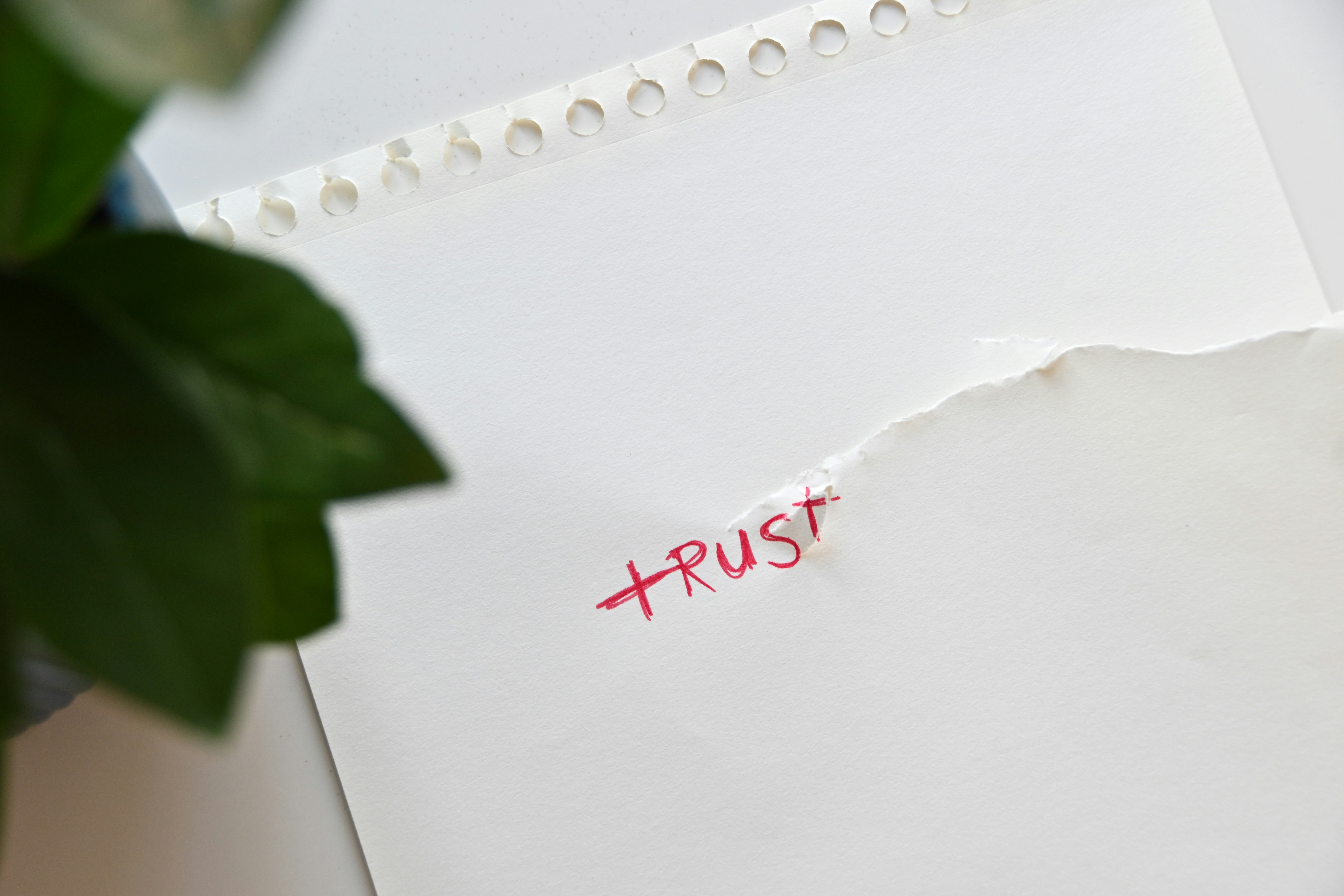
Trust is central to our ability to connect deeply.
Without trust, we can never know peace, comfort, or true love. Though trust can sometimes feel elusive, or fickle even. In intimate relationships, trust is the glue that keeps us sticking it out. If the glue erodes or loses its tackiness, we can slip out of touch with one another. We all know the importance of trust in loving intimate relationships, but we can overlook that trust is equally as important in collegial and professional relationships.
Trust shows up differently in working relationships. It may take longer to develop and gain ground. It may even seem instantaneous in others. How we trust, is as unique a feature as any other personal characteristic. I’ve said before that trust, like respect, may need to be earned by some, and for others, it is automatic, but easier to lose. Whether you’re a prove I can trust you or a prove me wrong person, trust isn’t something to be dismissed.
For the longest time, I was a prove I can trust you type. I know it stemmed from my childhood and the toxic adults who failed to care for my needs. As I got older, I loosened up more and found that trust isn’t necessary in every working relationship. Some relationships exist superficially, like annual transactions that don’t take or give more than a meager amount. Any of us can handle those with ease, no trust necessary. Then there are the relationships where we have to engage, whether we have a choice or not. The recurrence of relationship is better built on a foundation of respect and trust. But not all of these interactions come with a clear understanding of what we are actually “signing up” for by being involved in them. Sometimes folks fail to meet deadlines, deliver, or be consistent. There are times when any or all of these things may not matter, and there are times when they make us look bad, even if we weren’t in control.
As I have found my way and who I am and how I work, I have come to know what I hope to see in collaborative partnerships. I have also learned what I look for when it comes to trust. Openness, strong work ethic, honesty, consideration, accountability, ethical standards, these are all vitally important for me to give some peace of mind over to another. To me, that’s what trust is, a sharing of self in a way that does not damage me or cause me to feel less safe in how I show up.
Sadly, over the years, I have failed to trust and lost trust quite a bit. Sometimes it happened because I was at fault and didn’t have the courage to openly address the problems. Other times, it was because the other person lacked the things that make up trust for me. We’ve all been there, with someone we don’t trust. Maybe you could easily avoid this person, and no one would be the wiser. Maybe you still had to engage them, be professional, and pretend everything was fine. If you’ve done this, I see your strength. I see the energy it took to hide your anxiety, your worry, and your feeling unsafe, so it didn’t harm the outcome of what was needed. It takes so much to remain balanced when you feel thrown off your sense of ease.
Trust is fragile.
We fail to recognize that trust is the main ingredient in any healthy and productive relationship, and when we fail to account for this, we fail in all our working endeavors. I have several relationships today where trust cannot be regained, for one reason or another. Sadly, there are personal ones too. I’m never happy over these situations and find I think on them often, looking for ways I could have handled it better, been more proactive, been more open. Still, there is only so much we can control.
I will say, when it comes to working relationships (or any kind really), communication isn’t just key, it is everything. Effective communication prevents many kinds of conflict. It starts by telling people what they can expect of you (the things you can control) and how you can show up as your best self.
For me, it means understanding that I am always juggling more than what any person or group may realize, because being an activist to me means serving others. I volunteer, a lot. I care about the wellbeing of my communities and want to give back. It means I can sign up for more than life will allow me to complete in a reasonable amount of time. I will never be angry at a reminder. Setting deadlines is how I hold myself accountable.
I hate the millions of messaging options and can only check a few of them a week before I am overloaded. Somehow, I still show up where I am supposed to (and early) every time. Text me if you want the fastest response. I care deeply about the quality of the work I produce, and I respect those who put time and effort into their work. I despise laziness and lazy shortcuts. Relationships matter.
I care (to some degree) about every person I’ve had the honor of speaking to and learning from, even if I may not like them. I genuinely want to help others, and my heart holds space for countless, countless stories.
I prefer candid expression. I give honest feedback, positive criticisms of work, but I’m not emotionally attached to any one piece of content or effort – not in the sense that I fear or will get offended by feedback. I want the things I do to be of the highest quality, so help me by being honest. But know, I will tell you the truth. Don’t ask my opinion if you don’t like the truth. And don’t lie to me.
I think about everything all day. When I’ve decided to put something together, I have spent more time thinking of angles and possibilities than you likely realize. Assume as much. Please don’t treat my work as though it is off-the-cuff, poorly considered, or impulsive. It is likely not perfect, but it isn’t something I just thought of and decided to do.
In knowing my expectations of me, you can understand how to set your own expectations of me. If we honestly discussed how we show up, at the beginning of a working relationship, we could save ourselves a great deal of trouble, worry, and misunderstanding. Why don’t we have these types of conversations from the onset of working opportunities? I think it’s because we don’t think about it, don’t know any better, don’t know ourselves, or just do things as they happen.
Conflict happens. Sometimes it can’t be addressed, because it takes all involved being willing… to be honest, to be open, to be introspective. Conflict can deepen trust, if handled quickly and done correctly.
To save trust, we must speak up early and do so earnestly. To build trust, we must be honest with ourselves and others about how best we show up. To maintain trust, we must do what we say, over and over and over again, until our patterns are not merely predictable, but peace-bringing.
Whether you’re a “show me proof” or a “you proved me wrong” type of truster, I hope you find others who consistently bring you peace of mind for you and all you hope to do.
Leave a comment