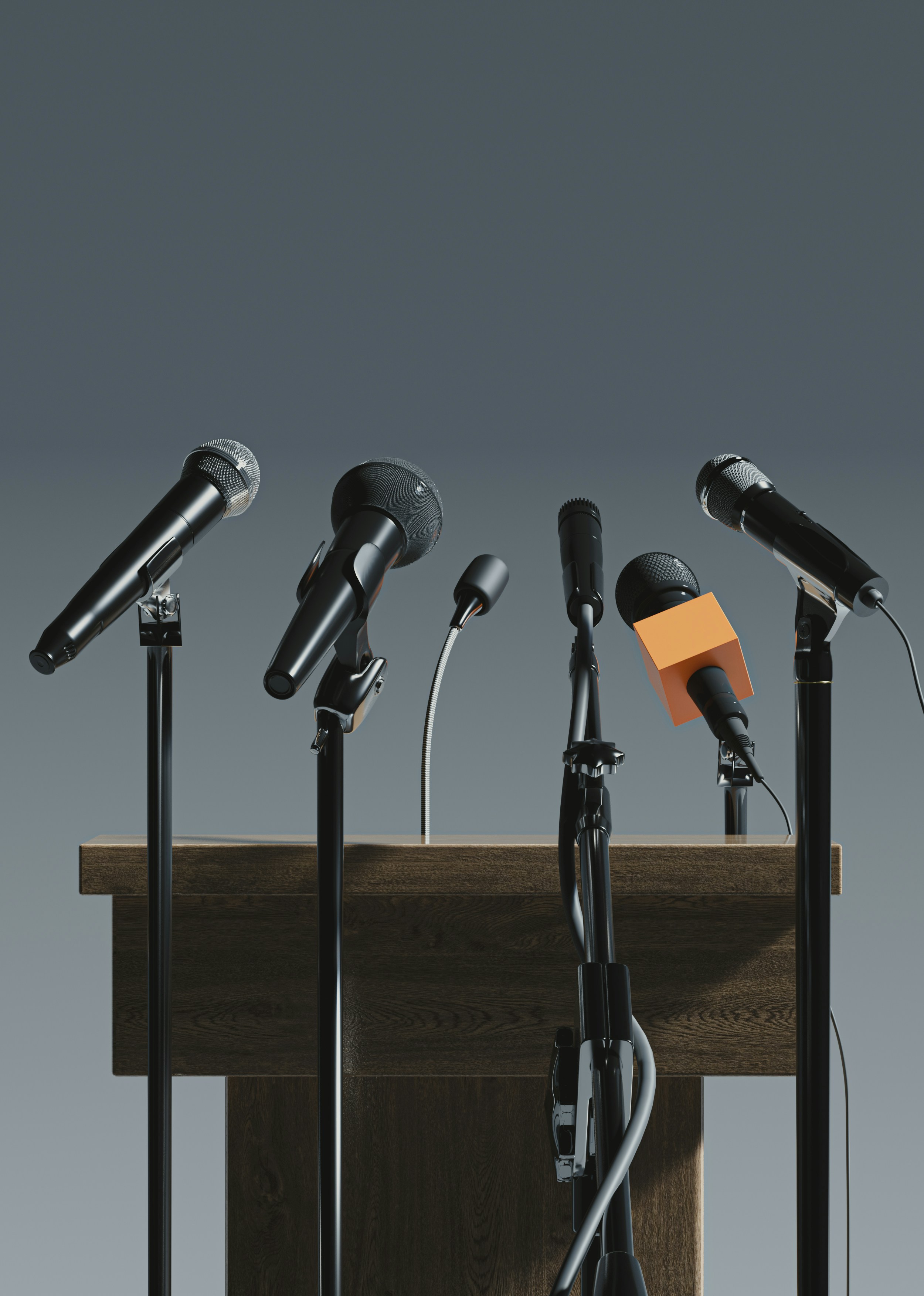
In public speaking, something always goes wrong. It’s best to set your mind to this as a fact, a static expectation, a simple truth. The more you travel and speak, the more that will not only be guaranteed to go wrong, but will also be so far out of your control. Being an excellent speaker means being a control freak with nothing to control. You carry every extra cord, hoping you don’t have to whip out your really cool “tech bag”, but also hoping just a bit you do, so you can be the MacGyver of the Mic. Debonair, tech extraordinaire.
Early days I carried the cheap laptop and no cords. I didn’t realize how “living on the edge” I really was back then. Looking back now, it’s both cute in an “aw, she was young” and “how naive” kind of way. I’ve got loads of stories of showing up to no equipment, or ancient caveman situations where writing on the walls was quite literally the best option. I got really good at out-of-the-box thinking because sometimes the equipment box hadn’t been touched in years, and cords had been eaten away by time, or rats.
You knew back then I’d had enough with the tech roulette table when I tossed my hands in the air and just started from some random quote or opening. We were getting a “soup of the day” kind of speech, and it sort of ended up better than if I had planned it. Years of popping up to places where you never knew, no matter how many times you asked ahead of time, what you would be walking into, really trained you for flexibility above all. It isn’t that I’ve seen every situation already and immediately know how to troubleshoot; it’s that you know you will likely have to pivot and that the most important thing is that you keep the audience with you while you do. For there is no greater failure than to “lose the room.”
Make sure that at no time they are lost in why changes take place, or they will work against you at every turn. I have a few names that stand out to this day of people who just could not understand that I walked in after having driven for hours and had no way to have a perfect setup. Well, I guess I could have lugged a tiny U-Haul behind my car and just carried it all with me. Sorry, Sheila, that 3/10 eval wasn’t completely unrealistic, so it would seem.
I must admit that going “national” has its downsides, though. Those guaranteed floor monitors, phew, do they make you never want to go back to the old days or the old ways. I used to have to just remember what my next slide was and notes… You’re kidding if you think you’re going to be able to see any speaking notes. You’d better remember what that main point of the slide was, honey. You better hope that old age doesn’t rear its memory-erasing head mid-slide and leave you literally speechless while in front of the room. But if it does, make sure your comedic timing and wit can make up for what is likely inevitable. Anything can be made better with a good joke.
Now I can stand on stage and glance quickly down and even see notes, if I ever remembered to actually add any. Wow, am I spoiled. Well, on that big stage, maybe, but this past event was a reminder of not only where I have been but the hard work I have put in over my career to truly hone my craft.
There are events that just seem to have a run of bad luck, and this past one felt like the event space had never once used sound before we all arrived. From static feedback in the main event space all morning, to video feeds with no sound in all the breakout rooms. The worst, for me, was the film screening. I mean, how does one screen a film when the sound doesn’t work? I guess we could have gone all captions and the panelists could have taken turns reading… almost like a live-action dubbed film. Perhaps that’s the new trend we never knew we needed.
The plan was to show the film and then hold a brief panel discussion at the end. But the film outright refused, and after nearly 15 minutes of three AV guys running around sweating like an NFL team, things weren’t looking good. We had vamped, we had waited, and I was increasingly concerned that folks would start to walk out the door. So I made a small suggestion that we flip the plan and hold the panel on the front-end and the film on the backend, if we could even show it at all.
The other problem was that the room was just a breakout room. A small table sat at the front beside the podium, with three chairs behind the table. The chairs were at the same height as the audience chairs, not elevated. This meant that as soon as us three panelists sit, the folks in the back of the room will only hear voices and not be able to see who is speaking. Sound seems to be working against us at every turn. So I let my colleagues know we have to stand, “the whole time?” one asked, “Yes, the whole time.” That, or leave the audience to decide later which voice went with which human.
So, here I am standing beside the podium, and I get my first question. To be honest, in this moment, sitting here writing, I don’t know that I even remember the exact question. I only know that as I start to answer, mic in my left hand and podium inches from me on my right, those three AV guys start to have a full-on no-holds-bar fight with the microphone beside me. From the corner of my eye, it looked like I was about to be one eye short for the rest of the week because they were coming right for me. Karma, me thinks quickly? Who knows….
I lean toward my left slightly, and almost instinctually begin to incorporate what is happening into my answer…
“Sometimes, something happens that we couldn’t have planned.”
Gesture gently with my right hand to the scene ensuing at the podium.
“When this unexpected event happens, we find ourselves in chaos, and confusion.”
Continues to gesture lightly.
“But the hope is that there can be a solution, maybe not one we could have planned for, but one that not only helps us get through but also keeps us from experiencing that same problem again.”
Now, I couldn’t drop the mic and risk losing what little sound we could control, but believe me, that would have been a nice moment to do just that.
The thing is that although I cannot know what it looked like to the audience, that simple pivot and “addressing the elephant” or “calling the room” were skills I learned way back when. Because I studied comedy. In one of my hyperfixations, I spent a year reading books on comedy and watching stand-up comedy nonstop. I wanted to improve my speaking and how I held a room. I wanted to do better at what I could control, because that darn box almost never had the one cord you actually needed. So I read the Comedy Bible, among dozens of others, and watched every niche stand-up comedian you’ve never heard of from literally across the world.
I studied. I practiced, and now when the time comes, as it almost always will, I can pivot with ease.
To be better, we must put the work in, and we all know this. What we don’t always realize is that when someone makes it look easy or “natural,” they’ve likely put more work in than you can imagine. I’m not a natural public speaker; I’m a learned one, and better yet, I’m luckier because I am practiced. Practice doesn’t make perfect, it just adds pivoting to your back pocket of tricks and tools. In my opinion, flexibility and adaptability are the best tools any public speaker could ever have.
They say true mastery comes after 10,000 hours of learning and dedication.
10,000 hours is 1 year, 1 month, and 21 days.
I started my public speaking journey in 2013, and I still don’t feel like a “Master.”
You can do anything.
You just have to start by doing it.
Leave a comment