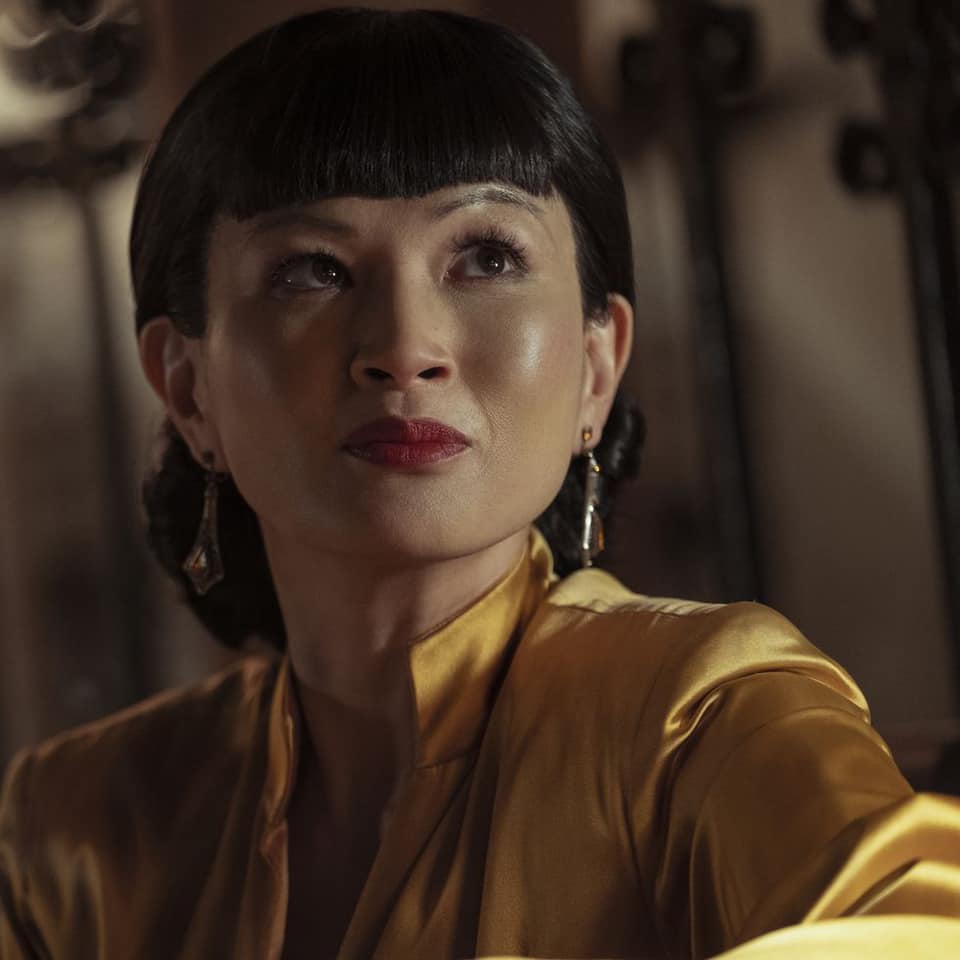
There are only ten days left of May (Asian American Pacific Islander Month), so I will be doubling down on some AAPI posts in order to get through more of the history and historical figures that comprise our past.
***************
1905-1961 Anna May Wong
A few years ago, Jeff Fuller-Freeman obliged me by doing a photo shoot which we can refer to as my Ode to Anna. Her life and work is definitely worth honoring. If only she had gotten the respect she so deserved while she was still alive.
__________________________________
Wong was notoriously pigeonholed by the industry into stereotypical roles as a “dragon lady” or fetishized seductress. The actress was born Wong Liu Tsong in 1905 in Los Angeles’s Chinatown district. Her parents owned a laundromat. She attended a mostly white school, but as a third-generation Chinese American, she still experienced racism and ultimately transferred to a Chinese school.
At a young age, Anna was fascinated with the movies. She used the tips she earned delivering laundry to buy movie tickets. She also frequently skipped school to watch movies being filmed on the streets of Chinatown. When Anna was 14, she got her first part in a movie. She was an extra in The Red Lantern. Although she had no lines and no official credit recognition, she decided it was the beginning of a big career.
Wong appeared in over 50 films in her lifetime, according to The New York Times, which included 1932’s famous Shanghai Express, where she starred opposite Marlene Dietrich. But she was often cast in sensual or subservient roles. In The Thief of Bagdad, she had a small part as a Mongol slave, but it received a lot of attention because she was barely clothed, sporting only a bandeau top and mini skirt seemingly fashioned out of silk scarves.
Due to the impact of anti-miscegenation laws, she was often cast as the villain or sexual predator instead of as an on-screen love interest. Although Anna’s roles were limited, she became wildly popular with viewers of diverse backgrounds. Asian Americans were thrilled to see an Asian person on screen. White audiences saw her as an exotic “Oriental.” Even though she often played stereotypes, she also showed viewers that Asian women could be successful professionals.
But being Chinese American in the United States was a challenge. Under the Chinese Exclusion Act, all people of Chinese descent had to carry identification papers proving they were allowed to be in the country. Even when Anna’s face was on billboards and movie screens across the country, she had to constantly prove her citizenship.
By the 1930s, Anna worked around the globe. She continued to find success in Europe, but often returned to Hollywood. In 1935, Anna auditioned for the film adaptation of Pearl Buck’s Pulitzer Prize-winning book about Chinese farmers, The Good Earth. The book was a national best seller and the movie was expected to be a huge hit. But the part was given to Luise Rainer, a white actress in yellowface. Anna was devastated.
On February 3, 1961, she died of a heart attack in her sleep after a long battle with alcoholism that stemmed from discontent with her career and the limited roles she was able to garner.
#aapi#AAPIHeritageMonth#annamaywong#asianamerican
Further Learning:
https://www.womenshistory.org/…/biographies/anna-may-wong
Leave a comment