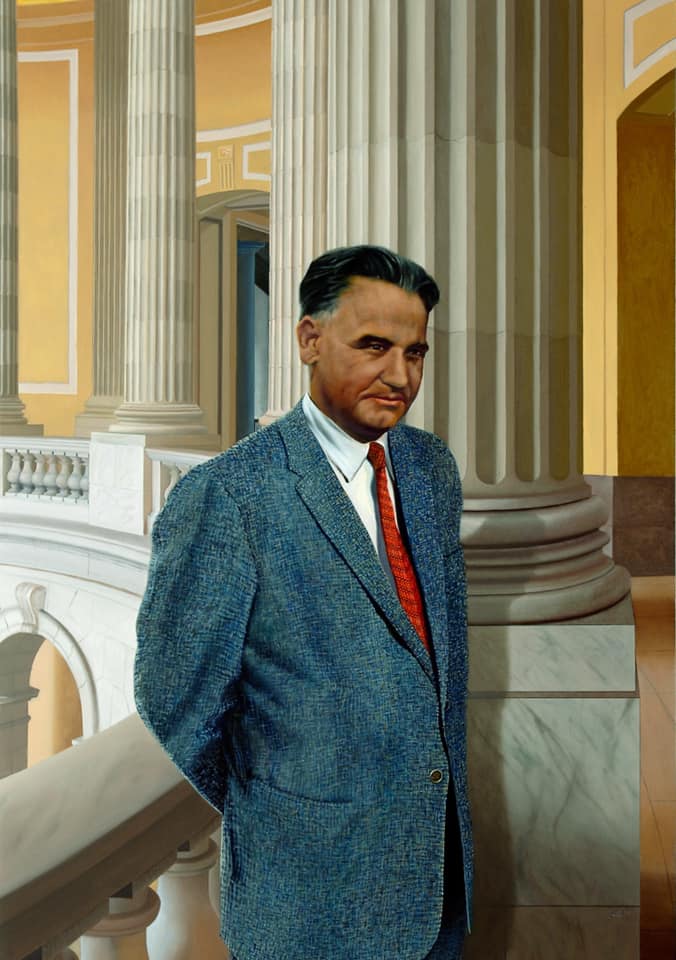
January 3, 1957
Dalip Saund of California is sworn in as a U.S. Representative, becoming the first Asian-American, first Indian American and first Sikh to serve in Congress.
November 1956, D. S. Saund, who everyone simply called “Judge,” became the first person of Asian descent elected to serve as a United States Representative. He was a tireless champion of his southern California district and the farmers who called it home. But his unique backstory—born in India, naturalized U.S. citizen, successful businessman, county judge—also catapulted him to the international stage. During his career in the House of Representatives, at the height of the Cold War, Saund became something of a transcendent politician who had the singular ability to engage audiences abroad. Although he frequently confronted discrimination during his life in the United States, Saund maintained his belief in the promises of American democracy.
During World War I, Saund read the speeches of President Woodrow Wilson in the news and later discovered the writings of Abraham Lincoln, especially the moving words of the Gettysburg Address. “Lincoln,” Saund later wrote, “changed the entire course of my life.” Saund had planned to spend no more than a few years in America learning the fruit-canning business before returning home. His trip west took him from Bombay to England and from England to Ellis Island, New York, where he arrived on September 27, 1920. “You are now a free man in a free country,” one of the immigration officers told him. Saund made his way west and enrolled in the University of California’s agricultural school and mathematics department as well.
When he was not farming, Saund was a popular speaker in the valley and addressed local groups nearly every week. He learned how to think and speak in the moment, unscripted, during his involvement with the Toastmasters Club.
As the election heated up, Saund adamantly refused to go negative, his message being, “I am not running against anybody; all I’m asking for is a job, and it’s up to you to judge whether I deserve your support or not.”
“Doc, tell us, if you’re elected, will you furnish the turbans or will we have to buy them ourselves in order to come into your court?” someone later asked him in the middle of a restaurant. “My friend,” Saund responded, “you know me as a tolerant man. I don’t care what a man has on the top of his head. All I’m interested in is what he’s got inside.” On Election Day, Saund won by 13 votes.
In his memoir Congressman from India, Saund wrote in support of the mid-20th century African American civil rights movement: “There is no room in the United States of America for second-class citizenship.”
#aapiheritagemonth#AsianAmericans
Further Learning:
https://history.house.gov/People/Detail/21228
https://www.pbs.org/rootsinthesand/i_dalip1.html
Leave a comment